In a country as vibrant and diverse as Nigeria, poverty is not just a matter of statistics. It is a lived experience for millions. Across urban and rural communities, countless individuals struggle daily to meet basic needs such as food, shelter, healthcare, and education. Yet, amid these harsh realities, there is a profound truth. To achieve lasting transformation, poverty alleviation efforts must be rooted in empathy and dignity.
At Supportive Pillar Foundation (SPF), we have learned that poverty is not only about material deprivation. It is also about the loss of self-worth, hope, and belonging. When interventions restore these human values, they create far more than temporary relief—they inspire renewal, confidence, and resilience.

Understanding Poverty Beyond the Surface
Poverty in Nigeria is a complex issue. Recent reports from the World Bank indicate that the country’s poverty rate stands at 56%. Over 129 million Nigerians are living below the poverty line. Several economic factors, including high unemployment, inflation, and inadequate infrastructure, contribute significantly to this situation. Furthermore, it is essential to acknowledge that poverty includes emotional and social dimensions that cannot be overlooked.

Too often, people living in poverty are defined by their lack of money, education, or opportunities—rather than their potential. They are seen as recipients of charity rather than active participants in community development. This perspective limits the effectiveness of aid. It reduces people to numbers instead of recognizing them as individuals with dreams and aspirations.
Empathy and dignity offer a way out of this cycle. They remind us that every person, regardless of circumstance, deserves to be treated with respect and compassion. True poverty alleviation starts when we begin to understand people’s struggles from their perspective, not from a distance.
The Power of Empathy in Poverty Alleviation
Empathy is the ability to feel and understand another person’s situation—to see the world through their eyes. In the context of poverty alleviation, empathy bridges the gap between donors, volunteers, and beneficiaries. It transforms giving from a transaction into a relationship.
When organizations like SPF approach their work empathetically, they move beyond “helping” to “connecting.” Empathy allows us to ask deeper questions:
- What does this widow need to regain her sense of independence?
- What skills would empower this young man to feed his family sustainably?
- What kind of support would make this child feel seen and hopeful again?
These questions lead to solutions that are human-centered, practical, and sustainable.
For instance, during our recent Widows Support Scheme, volunteers and beneficiaries formed strong emotional connections. This bond often becomes the most transformative aspect of the outreach. It is not just about distributing food packages. It involves listening to their stories.
We acknowledge their strength. We assure them that they are not forgotten. This sense of being understood and valued rekindles hope and motivation, which are critical in breaking the cycle of poverty.

Empathy, therefore, is not weakness; it is a strategic strength. It guides effective interventions. This ensures that every program meets real needs rather than assumed needs. Empathy helps us connect emotionally, while dignity ensures that our approach to poverty alleviation respects and uplifts individuals. Dignity involves recognizing that every human being, regardless of their financial or social status, has inherent worth.
Dignity: Restoring Value to Every Life
While empathy helps us connect emotionally, dignity ensures that our approach to poverty alleviation respects and uplifts the individual. Dignity is about recognizing that every human being—no matter their financial or social status—has inherent worth.
Unfortunately, many well-intentioned interventions in Nigeria have unintentionally stripped people of dignity. Public handouts can create dependency. Exploitative media coverage of beneficiaries can worsen the situation. Language that portrays them as helpless can also erode self-respect. Such approaches may provide short-term relief, but they rarely inspire long-term change.
At SPF, dignity shapes everything we do. We provide food and sponsor skills training. We also offer business grants. We ensure that our beneficiaries are treated as partners in progress, not objects of pity.
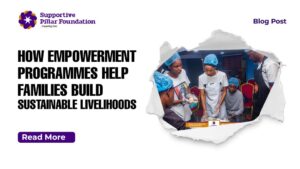
During our empowerment programmes, for example, participants are encouraged to take ownership of their development journey. They are not merely “helped”—they are equipped. This sense of ownership restores confidence, encouraging beneficiaries to see themselves as capable contributors to their families and communities.
Dignity also plays a role in how we communicate. We avoid language or imagery that portrays people as victims. Instead, we share stories that highlight courage, resilience, and transformation. When people see themselves celebrated rather than pitied, it reinforces their sense of worth and motivates them to aim higher.
Empathy and Dignity in Action: Lessons from the Field
In Nigeria’s informal economy, many survive through petty trading, subsistence farming, and small-scale services. Poverty alleviation cannot rely solely on financial aid. It must also address the emotional and psychological barriers that keep people trapped in poverty.
Through SPF’s work, we have seen how empathy and dignity change lives in subtle but profound ways:
- During Feeding Programmes:
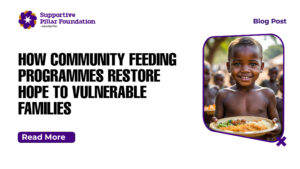
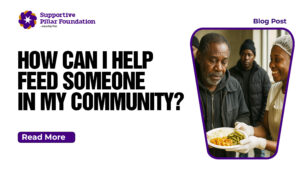
Volunteers don’t just distribute food; they engage in conversations, share smiles, and remind beneficiaries that they matter. These interactions humanize the experience and foster a sense of belonging. - In Skill Acquisition Training:
Trainees are encouraged to share their goals and challenges openly. By creating a supportive environment, SPF helps them overcome self-doubt and realize their potential. - In Business Empowerment Initiatives:
When widows or young entrepreneurs receive start-up grants, they are given mentorship alongside funding. This approach dignifies their effort and ensures that the support leads to self-reliance, not dependency. - In Community Engagement:
SPF emphasizes collaboration with local leaders and participants. This participatory model respects local wisdom and empowers communities to sustain projects even after direct interventions end.
These examples demonstrate that empathy and dignity are not abstract ideals—they are practical tools for transformation.
Why Empathy and Dignity Matter for Long-Term Change
Empathy and dignity produce ripple effects that extend beyond immediate relief. When people feel respected and understood, they are more likely to engage actively in improving their circumstances. This builds community ownership, which is vital for sustainability.
Moreover, dignity-based approaches challenge societal attitudes toward poverty. They remind others that those in need are not lesser; they are equals facing temporary hardship. This shift in mindset encourages more inclusive policies, volunteerism, and social solidarity.
In the long run, empathy-driven poverty alleviation fosters social cohesion. Communities where people look out for one another are stronger, safer, and more prosperous. Poverty, after all, is not just an economic problem—it is a social one.
The Role of Organizations Like The Supportive Pillar Foundation (SPF)
Supportive Pillar Foundation stands as an example of how empathy and dignity can be institutionalized in development work. Every programme—whether focused on feeding, empowerment, or education—is designed to meet both the physical and emotional needs of beneficiaries.
Our Widows Support Scheme provides food and comfort to widows. They have lost not just their partners but often their sense of stability. Our Skill Acquisition Programmes empower youths and women to learn trades that create independence. Our Business Grant—The Eagles’ Nest Initiative—helps small entrepreneurs grow their businesses, turning hope into opportunity.
Beyond the programmes themselves, SPF builds relationships. Volunteers, sponsors, and beneficiaries connect in meaningful ways that restore trust and humanity. Through these acts of compassion, we demonstrate that real change starts when people care. They must understand and respect one another.
Building a Culture of Empathy and Dignity in Nigeria
For poverty alleviation to succeed at scale, empathy and dignity must become cultural values—not just organizational principles. Government agencies, private companies, and individuals all have roles to play in ensuring that interventions empower rather than embarrass.
Here are a few practical steps Nigeria can take:
- Educate and sensitize aid workers on emotional intelligence and respectful communication.
- Encourage media ethics that portray beneficiaries with respect rather than pity.
- Promote volunteerism rooted in community understanding, not just charity.
- Design policies that prioritize human development over mere economic statistics.
- Foster collaboration between empathetic organizations like SPF and policymakers for grassroots-driven solutions.
When these steps are implemented, Nigeria can build a more compassionate system where social support uplifts rather than stigmatizes.
Conclusion
Empathy and dignity are not optional virtues in poverty alleviation—they are the foundation of meaningful, lasting change. They transform how we see others, how we act toward them, and how communities rebuild themselves from within.
At Supportive Pillar Foundation, we believe that every person deserves more than just food, skills, or financial aid. They deserve respect, understanding, and a voice. Because when we help people rise with dignity, we do more than alleviate poverty—we restore humanity.