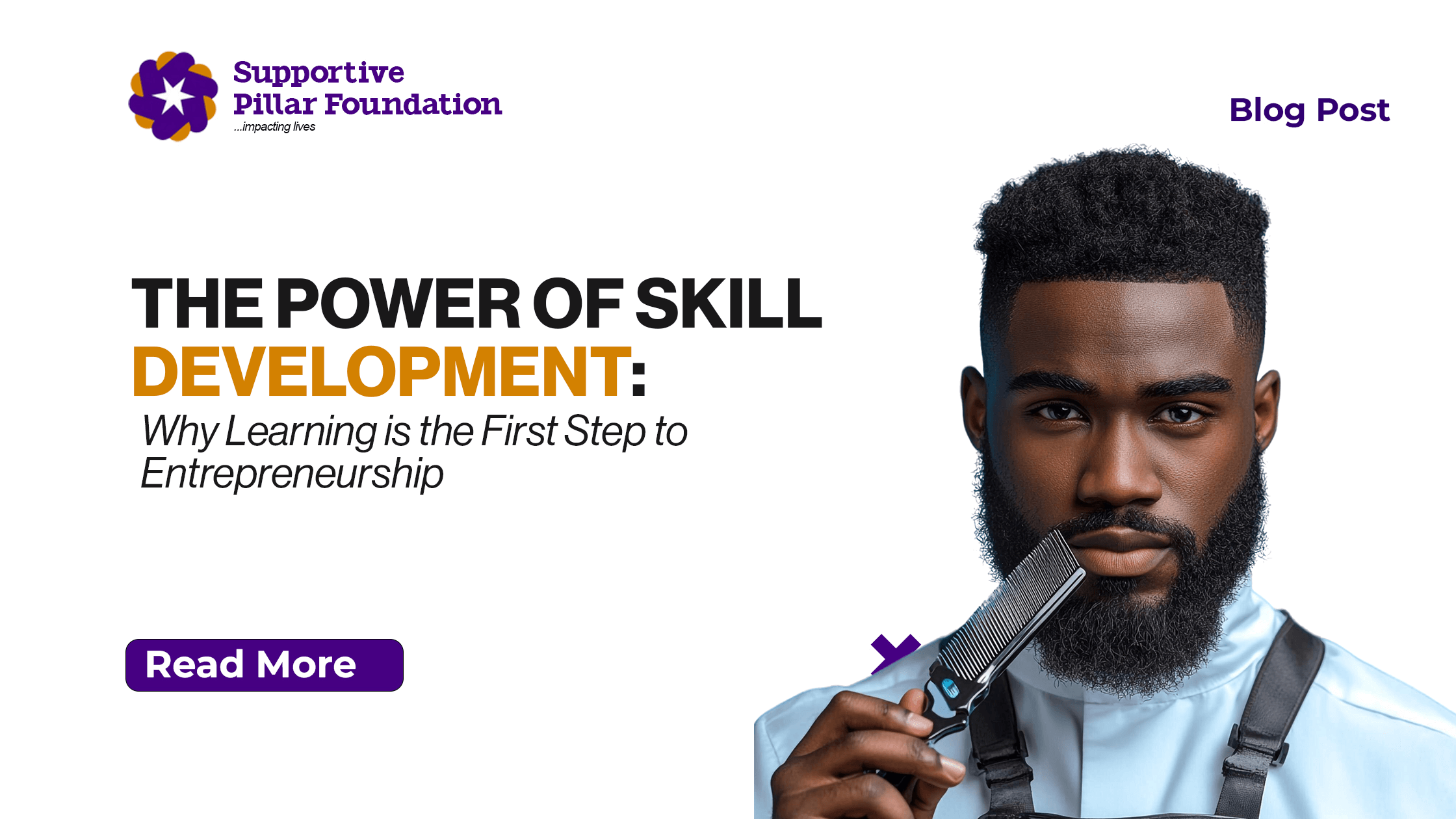

Entrepreneurship is more than just starting a business; it is about creating value, solving problems, and making a meaningful impact. However, before one can embark on this journey, acquiring the right skills is crucial.
Skill development is the foundation upon which successful businesses are built. Without the necessary knowledge and expertise, aspiring entrepreneurs may struggle to turn their ideas into profitable ventures.

This article explores the power of skill development and why learning is the first and most essential step to entrepreneurship.
The Link Between Skill Development and Entrepreneurship

Skill development and entrepreneurship are intrinsically connected. Every successful entrepreneur possesses a set of skills that enable them to navigate the complexities of running a business. These skills can be classified into technical, business, and soft skills.
1. Technical Skills
Technical skills are industry-specific abilities that allow entrepreneurs to create and offer products or services. For instance:
- A fashion entrepreneur must learn tailoring or fashion design.
- A tech entrepreneur should have computer programming or software development skills.
- A baker needs expertise in baking techniques and food handling.
Without these fundamental skills, an entrepreneur may struggle to produce high-quality offerings that attract customers.
2. Business Skills
Beyond technical expertise, business skills are necessary for managing operations, finances, and growth. These include:
- Financial literacy: Understanding cash flow, budgeting, and pricing.
- Marketing and sales: Knowing how to attract and retain customers.
- Business management: Handling inventory, supply chains, and employees.
Mastering these skills increases the chances of business sustainability and profitability.
3. Soft Skills
Soft skills enable entrepreneurs to communicate effectively, lead teams, and adapt to challenges. These include:
- Problem-solving: Finding innovative solutions to business hurdles.
- Leadership: Motivating and guiding employees or collaborators.
- Networking: Building relationships that foster business growth.
- Time management: Prioritizing tasks for efficiency.
Entrepreneurs with strong soft skills can navigate uncertainties and build strong connections within their industry.
Why Learning is the First Step to Entrepreneurship

1. Bridges the Gap Between Ideas and Execution
Many people have great business ideas, but without the right skills, these ideas remain just that—ideas. Learning helps bridge the gap between an idea and its execution. For example, someone passionate about graphic design but lacking design skills can enroll in training programs to master the craft before launching a design agency.
2. Reduces Business Risks
Starting a business without adequate knowledge increases the risk of failure. Skill development provides entrepreneurs with the necessary tools to make informed decisions. Understanding market trends, customer behavior, and financial management helps reduce costly mistakes that could derail a business.
3. Enhances Innovation and Creativity
Continuous learning fosters innovation and creativity. Entrepreneurs who invest in skill development can identify gaps in the market and create unique solutions. For example, a person who learns digital marketing can leverage the latest online tools to promote their business effectively, reaching a larger audience than traditional methods.
4. Builds Confidence and Credibility
Having the right skills instills confidence in entrepreneurs. When individuals are knowledgeable in their field, they can communicate their vision effectively, attract investors, and gain customer trust. A well-trained entrepreneur is more likely to be taken seriously in their industry.
How to Develop Entrepreneurial Skills
1. Enroll in Training Programs and Workshops
Formal training programs, like SPF’s skills acquisition initiatives, provide hands-on experience in various industries. These programs equip participants with practical skills that can be applied directly to their business endeavors.
2. Leverage Online Learning Platforms
Platforms such as Coursera, Udemy, and LinkedIn Learning offer courses in business management, marketing, and industry-specific skills. Entrepreneurs can take advantage of these resources to enhance their expertise.
3. Seek Mentorship and Networking Opportunities
Learning from experienced entrepreneurs can provide valuable insights. Networking with industry experts, joining business forums, and attending entrepreneurship events create opportunities for mentorship and collaboration.
4. Engage in Hands-on Experience
Practical experience is one of the best ways to develop skills. Internships, apprenticeships, and part-time roles in relevant industries provide firsthand knowledge and exposure to real-world business operations.
5. Stay Updated with Industry Trends
Business landscapes evolve rapidly, and entrepreneurs must stay informed. Reading industry publications, attending webinars, and following thought leaders can help entrepreneurs adapt to changes and remain competitive.
The Role of SPF’s Eagles’ Nest Business Grant in Skill Development
Supportive Pillar Foundation (SPF) recognizes the importance of skill development in entrepreneurship. Through the Eagles’ Nest Business Grant, SPF provides a platform for individuals who have acquired skills through its annual skill acquisition program to launch or expand their businesses. By awarding grants to deserving participants, SPF empowers entrepreneurs to turn their learned skills into sustainable businesses, fostering economic growth and job creation.
The Psychological and Social Benefits of Skill Development
Beyond financial success, learning new skills offers psychological and social benefits.
1. Boosts Self-Esteem and Motivation
When entrepreneurs acquire and master skills, they gain confidence in their abilities. This self-assurance fuels motivation, encouraging them to take risks and push their business forward despite challenges.
2. Encourages Lifelong Learning
Entrepreneurship is a continuous learning process. Those who invest in skill development early in their careers are more likely to embrace lifelong learning, adapting to industry changes and technological advancements.
3. Strengthens Community Development
Skilled entrepreneurs contribute to their communities by creating job opportunities and offering mentorship to others. By sharing knowledge and training the next generation, they help foster a culture of innovation and self-reliance.
The Future of Entrepreneurship and Skill Development
As technology continues to evolve, skill development will remain a crucial factor in entrepreneurial success. The rise of artificial intelligence, automation, and digital marketing presents new opportunities for entrepreneurs who are willing to learn and adapt.
Future entrepreneurs must focus on acquiring:
- Digital skills, such as data analytics and social media marketing.
- Sustainability skills, to build environmentally friendly businesses.
- Emotional intelligence, to manage teams and customer relationships effectively.
Conclusion
Skill development is the backbone of entrepreneurship. Without the necessary skills, business ideas remain stagnant, and the chances of success diminish. Learning equips aspiring entrepreneurs with technical know-how, business acumen, and soft skills that enhance their chances of building successful enterprises. Whether through formal education, online courses, mentorship, or hands-on experience, investing in skill development is the first and most crucial step toward entrepreneurial success.
Through initiatives like SPF’s Eagles’ Nest Business Grant, individuals are encouraged to embrace learning, refine their skills, and take bold steps toward achieving their business goals.
As entrepreneurship continues to shape economies worldwide, the value of skill development cannot be overstated. For aspiring business owners, the path to success begins with learning and the willingness to evolve with changing times. The journey may be challenging, but with the right skills, dedication, and continuous education, success is within reach.